

The short version: Crown shaping and size control, from natural umbrella shapes to clean formal lines. The estimate is free and in writing, and one of our ISA Certified Arborists looks at it in person. Call or text (503) 551-5141.
What is tree shaping?
Tree shaping means carefully changing the form of a tree to get the look or the size you want. It can be done for appearance, or to keep the crown from growing into the house, the neighbors or the view.
- Crown reduction reduces the overall size of the tree while keeping a natural form
- Umbrella shaping creates a rounded canopy
- Structural pruning encourages balanced growth for stability
- Hardline shaping gives a geometric or formal look
Some trees grow into a good shape by themselves. Others need a little guidance. Japanese maples, ornamental cherries, plums and hedged conifers are the ones we shape most.
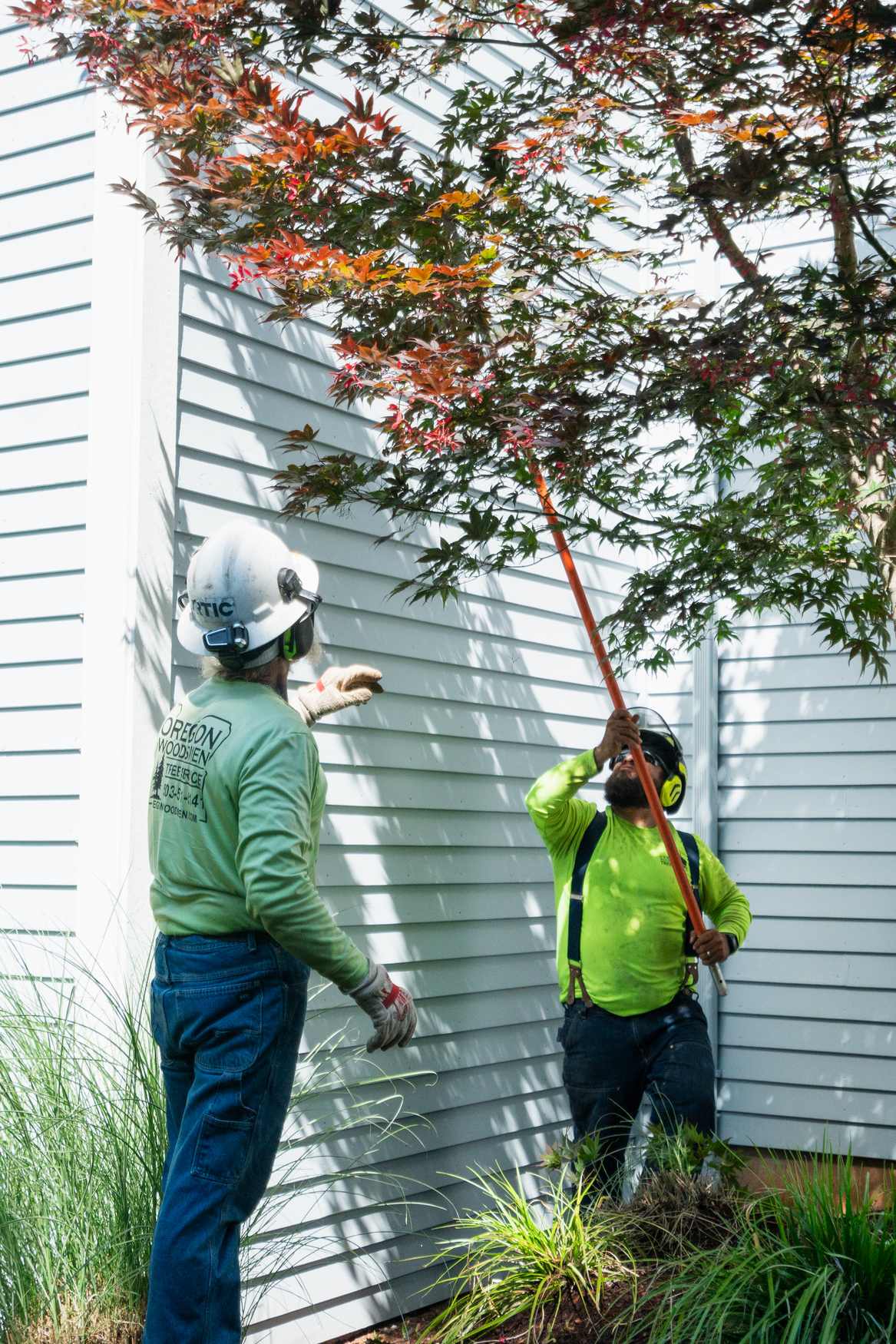
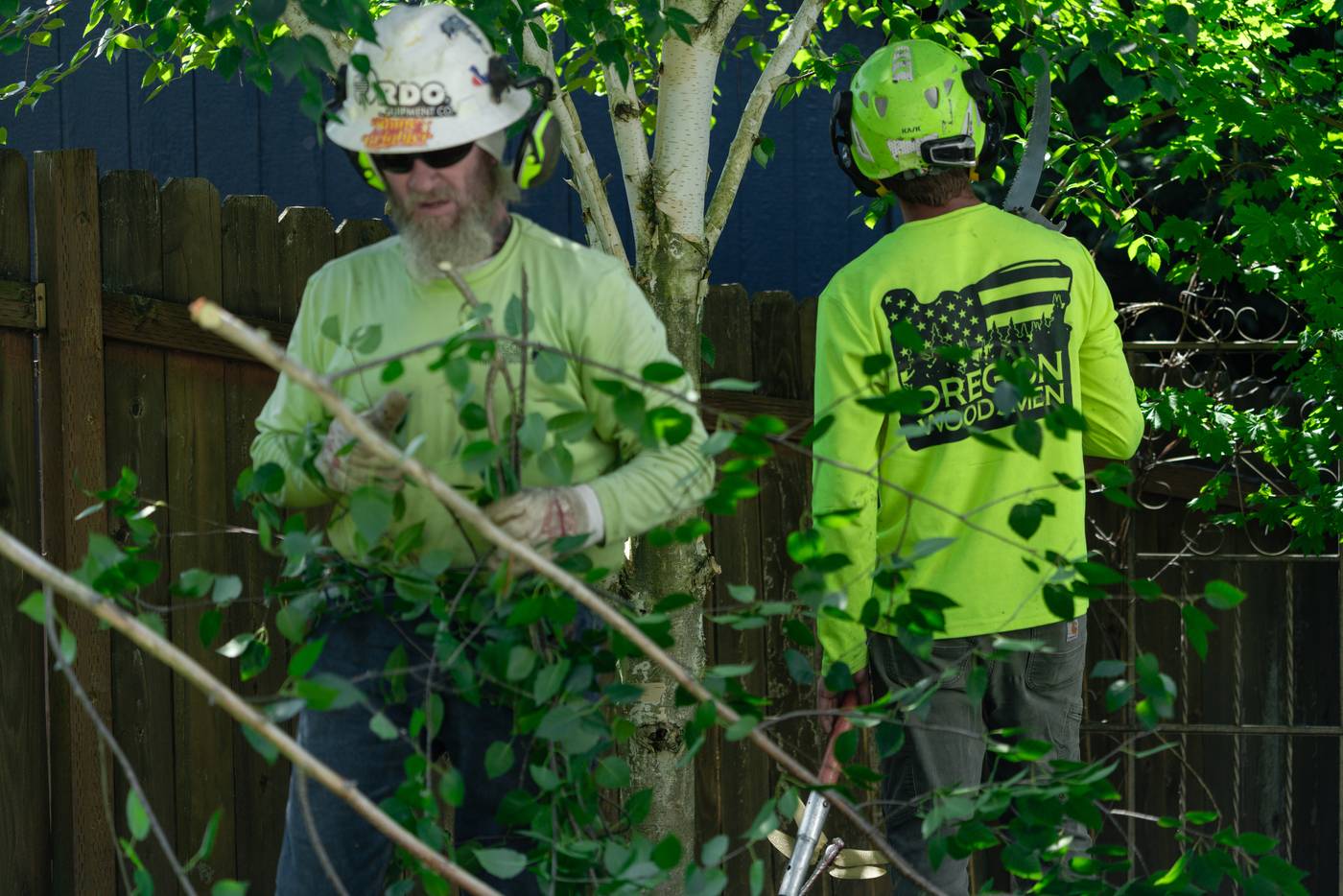
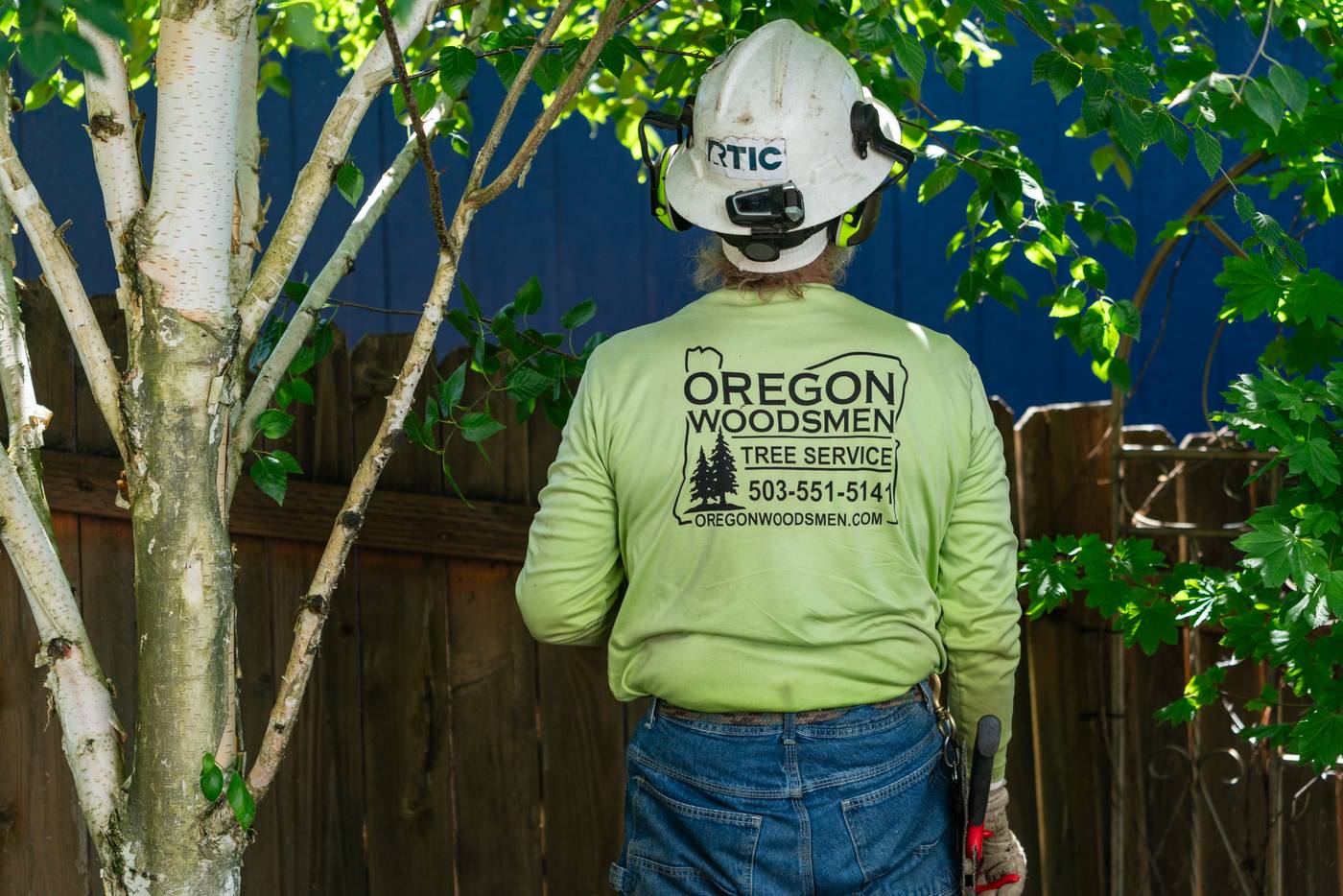
Shaping is a delicate process
Tree shaping is not just about looks. The tree has to stay healthy and strong afterward. Every tree is different, and what works for one may not work for another, so we look at the species, the age and your goal for the yard before we cut anything. We take only the branches that need to go.
Free written estimate: call or text (503) 551-5141
Which trees can be shaped, and which should not be?
Japanese maples, ornamental plums and cherries, arborvitae, laurel, boxwood and most hedged conifers take shaping well. Big shade and forest trees, like oaks, firs and cedars, should not be forced into a shape. For those the right tools are deadwood removal, thinning and careful reduction of individual limbs.
One customer had us remove three large bushes and then trim and shape seven or eight trees in a single morning. That is typical: shaping is usually part of a bigger yard clean-up.
How often does a shaped tree need to be redone?
Formal shapes and hedges usually need attention every year, sometimes twice. Natural shaping on an ornamental tree holds for two to three years. We will tell you what schedule your trees need so the work stays small each time.
When is the best time to shape trees?
Late winter for most deciduous ornamentals, before the buds open, when you can see every branch. Japanese maples are best done in winter or in midsummer after the spring growth has hardened; cut in early spring they bleed sap. Hedges and arborvitae are usually trimmed in late spring and touched up in late summer.
“We have hired Oregon Woodsmen Tree Service two times in recent years. Both experiences have been extremely positive! The staff is knowledgeable and personable, the work is completed professionally and our trees look healthy and safe!”
What does tree shaping cost?
It depends on the number of trees, their size and how formal the shape is. Hand work on a detailed ornamental takes longer than a light reduction. Estimates are free, and if you have several trees we price them together.
How does tree shaping work with us?
Consultation and shaping plan
We visit your property, look at the shape of your trees and talk about what you want, whether that is the natural form or a more sculpted look.
Shaping and trimming
We reshape the tree carefully, paying attention to its natural growth pattern and your preferences.
Care advice
After shaping, we tell you how to care for the tree going forward so it keeps its shape.
Where do we offer tree shaping?
Across the Mid-Willamette Valley: Salem, Keizer, Dallas, Monmouth, Independence, Rickreall, McMinnville, Newberg, Corvallis. Our yard is in Rickreall, so Polk County and West Salem are closest, and we group jobs in the towns farther out. If you are not sure whether you are in our area, call and ask.
Tree Shaping questions
Can you shape any tree?
Most trees can be shaped, but some species are better suited to it than others. We will assess your tree and tell you the best approach.
Will shaping damage my tree?
Done correctly, shaping is good for the tree’s health and appearance. We remove only the branches needed to keep the tree strong.
How long does it take to shape a tree?
It depends on the size of the tree and how much shaping it needs. Typically a few hours to a day.
Can you reduce the height of a tree?
On many ornamentals, yes, by cutting branches back to smaller side branches so the tree keeps a natural outline. On large conifers and shade trees we will tell you honestly when height reduction would harm the tree and what the alternatives are.
Do you trim hedges and arborvitae?
Yes. Hedges, laurel and arborvitae are a regular part of shaping work, usually alongside other trees in the same yard.
Will a shaped tree need more care afterward?
Formal shapes need regular touch-ups to hold their lines. Natural shaping needs very little. We tell you which one you are signing up for before we start.
Related services
Tree Shaping near you
Free estimates. Honest answers.
Call or text the office, or send the estimate form. Jennifer answers the phone Monday to Friday, 7 am to 6 pm.